
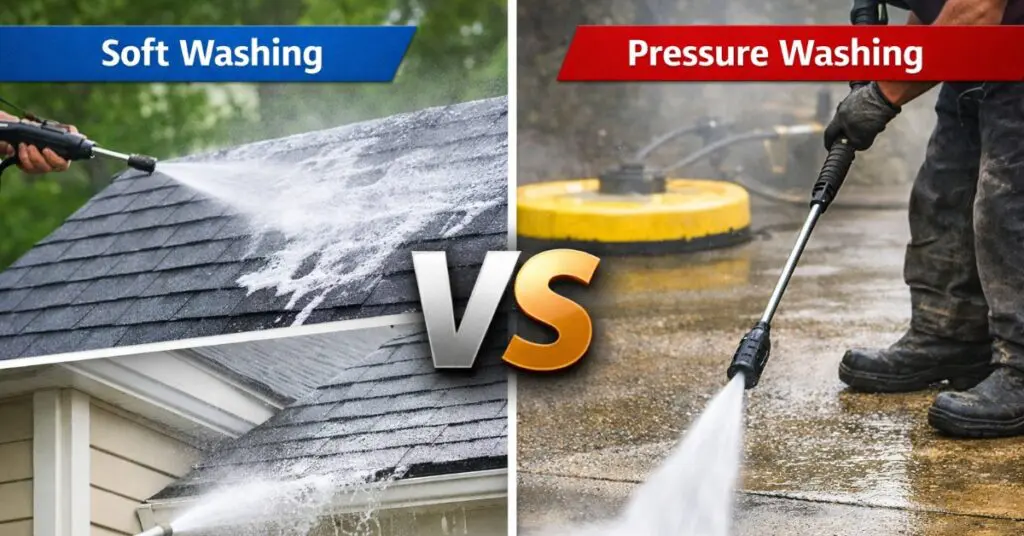
Soft Washing vs Pressure Washing in New Jersey: What Homeowners Need to Know
Homeowners across New Jersey often use the terms power washing and pressure washing interchangeably, while many are unfamiliar with soft washing altogether. Although all three are associated with exterior cleaning, they are not the same. Choosing the wrong method can damage siding, loosen shingles, etch concrete, or force water behind exterior surfaces.
Understanding soft washing vs pressure washing in New Jersey is especially important due to the state’s humid summers, tree coverage, freeze–thaw cycles, and winter salt exposure. Whether you live in Morris County, Passaic County, Essex County, Warren County, Sussex County, or the surrounding areas, selecting the correct cleaning method protects your home and avoids unnecessary repairs.
What Is Pressure Washing?
Pressure washing in New Jersey uses high-pressure water to remove dirt, grime, stains, and buildup from durable, non-porous surfaces. Professional equipment allows technicians to adjust PSI levels based on the material being cleaned.
Pressure washing is commonly used for:
- Concrete driveways and sidewalks
- Garage floors
- Stone patios and hardscaping
- Commercial walkways and entry zones
Driveway pressure washing in NJ is particularly effective for removing winter salt residue, oil stains, and embedded grime. However, pressure alone does not kill organic growth at the root, which means algae and mildew can return quickly if the wrong method is used.
What Is Soft Washing?
Soft washing in New Jersey relies on low-pressure water combined with biodegradable cleaning solutions. Instead of blasting contaminants away, soft washing treats algae, mold, mildew, and bacteria at the source, making it safer for delicate exterior materials.
Soft washing is the preferred method for cleaning:
- Vinyl and fiber cement siding
- Stucco and painted surfaces
- Roof shingles
- Wood trim and fascia
Roof cleaning in NJ should always be done using soft washing. High-pressure washing can strip shingle granules and significantly shorten a roof’s lifespan. Industry guidance from the Asphalt Roofing Manufacturers Association (ARMA) explains that asphalt shingles should not be cleaned with high-pressure methods, as this can damage the roofing system and reduce its service life.
For homeowners wondering how to remove algae from siding, New Jersey homes commonly experience, soft washing is the safest and most effective solution. It eliminates organic growth without forcing water behind panels or damaging exterior finishes.
Why the Difference Matters in New Jersey’s Climate

New Jersey’s seasonal conditions make method selection critical. Summer humidity encourages algae growth on north-facing siding, while shaded properties in Sussex and Morris counties trap moisture longer. Winter freeze–thaw cycles and road salt weaken concrete and masonry.
Is pressure washing safe for siding? Not always. Using high pressure on stressed or aging materials can accelerate deterioration and allow water intrusion. Soft washing eliminates organic growth safely while preserving surface integrity.
When Pressure Washing Is the Right Choice
Pressure washing is ideal when cleaning surfaces that can withstand force and abrasion.
Pressure washing works best for:
- Concrete driveways and walkways
- Garage floors
- Certain stone patios
- Commercial sidewalks and loading zones
Even on these surfaces, professionals calibrate pressure carefully to avoid etching concrete or loosening joint sand.
When Soft Washing Is the Safer Option
Soft washing should be used on any surface where pressure could cause damage.
Soft washing is recommended for:
- Residential siding
- Roof shingles
- Painted wood
- Stucco and delicate finishes
Soft washing in New Jersey delivers longer-lasting results by neutralizing organic growth instead of simply rinsing it away.
Soft Washing vs Pressure Washing for Concrete Surfaces
Concrete sits in a gray area in the soft wash vs pressure wash for concrete discussion. While concrete can tolerate pressure, shaded or moisture-prone driveways often develop algae that returns quickly without chemical treatment.
Professionals often use a hybrid approach:
- Soft wash treatment to eliminate organic growth
- Controlled pressure rinse to restore brightness
This method is especially effective in wooded neighborhoods across Warren and Sussex counties.
Common Pressure Washing Mistakes Homeowners Make
DIY pressure washing is a frequent cause of exterior damage. Common mistakes include:
- Using excessive PSI on siding
- Spraying upward under panels
- Blasting roof shingles
- Etching decorative concrete
Hardware-store equipment lacks the controls and surface-specific adjustments professionals use, leading to costly repairs.
Soft Washing vs Pressure Washing for Commercial Properties
Commercial properties require careful method selection to balance appearance, safety, and liability. Sidewalks and entryways often need pressure washing for stain removal, while building exteriors benefit from soft washing to protect finishes.
Commercial pressure washing in New Jersey must account for:
- Surface durability
- Runoff control
- Public safety
- Ongoing maintenance schedules
Cost Differences Between Soft Washing vs Pressure Washing
Pricing varies based on surface type, square footage, and severity of buildup. Soft washing may involve specialized solutions and dwell time, while pressure washing may require additional labor for stain removal.
For a full pricing breakdown, see what homeowners and businesses should expect to pay in our NJ power washing cost guide.
Seasonal Considerations for Each Method in New Jersey
The best time of year to power wash in New Jersey affects which method is emphasized.
Seasonal trends include:
- Spring: driveway pressure washing NJ to remove salt
- Summer: soft washing New Jersey siding to control algae
- Fall: preventative cleaning before freeze–thaw cycles
For a seasonal breakdown, explore our complete guide to the best time of year to power wash in New Jersey.
Safety and Environmental Considerations
Professional soft washing uses biodegradable cleaning agents designed to break down organic growth safely. Responsible pressure washing in New Jersey includes runoff management to protect landscaping and storm drains, especially in densely populated counties like Bergen and Essex.
Why Professional Method Selection Matters
Understanding soft washing vs pressure washing in New Jersey requires experience. Professionals evaluate material age, existing damage, moisture exposure, and prior cleaning history before selecting a method.
The wrong approach can void warranties, cause water intrusion, or permanently damage surfaces.
Why New Jersey Property Owners Trust A Brilliant Solution Power Washing
With a main office in Succasunna, A Brilliant Solution Power Washing serves homeowners and businesses throughout Morris County, Warren County, Sussex County, and surrounding New Jersey areas.
The services include:
- Residential house washing NJ
- Roof soft washing
- Driveway and concrete pressure washing. View our driveway and concrete cleaning NJ guide.
- Deck, patio, and pool deck cleaning. View our deck, patio and pool deck cleaning in NJ guide.
- Commercial exterior maintenance
Every project begins with proper method selection — not guesswork.
How to Choose the Right Cleaning Method for Your Property
Soft Washing vs Pressure Washing?
If you’re unsure whether your property needs soft washing or pressure washing in New Jersey, professional evaluation is the safest path. The correct method protects materials, improves curb appeal, and reduces long-term maintenance costs.
Ready to Schedule Safe and Professional Exterior Cleaning?
If you’re looking for reliable soft washing or pressure washing in New Jersey, A Brilliant Solution Power Washing is ready to help. With a main office in Succasunna, we serve homeowners and businesses across Morris County and surrounding areas with surface-specific expertise and proven results.
Contact our team today to schedule a consultation and ensure your property receives the safest and most effective exterior cleaning solutions.

